Measure the area you want to define
Measure the floor area around the furniture, rather than relying on the room’s total dimensions. Note the sofa width, the distance between seats or the space beside the bed. Record all measurements in the same unit.
Mark two possible rug footprints on the floor with removable tape that is suitable for the surface. Walk around them and check the routes you use every day. This turns an abstract size into a space you can judge.
Choose the relationship to your furniture
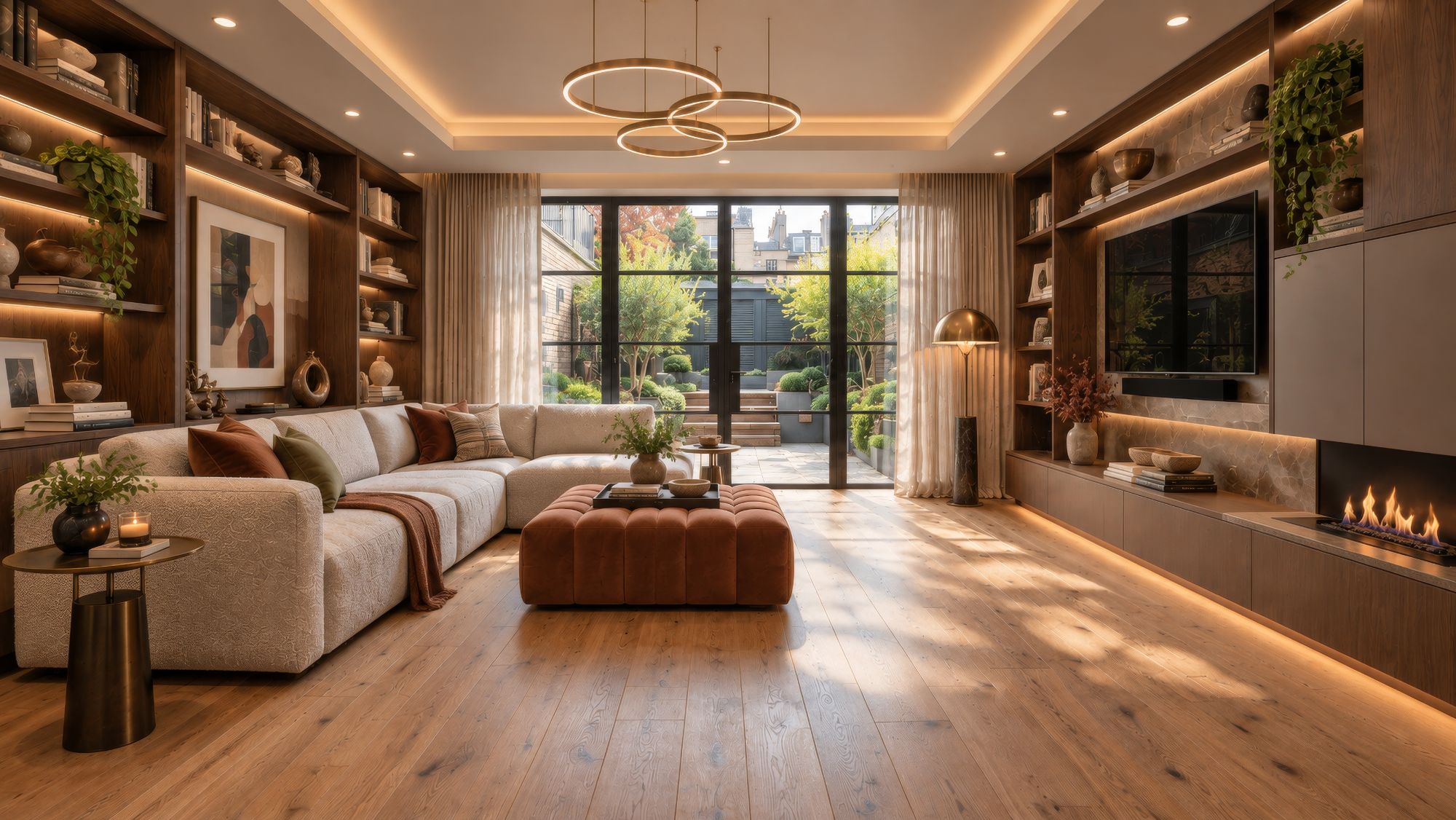
In a seating area, compare a rug that sits beneath the front furniture legs with one that brings more of the group onto the rug. Neither arrangement is a rule: the useful question is whether the pieces feel connected and the layout remains comfortable.
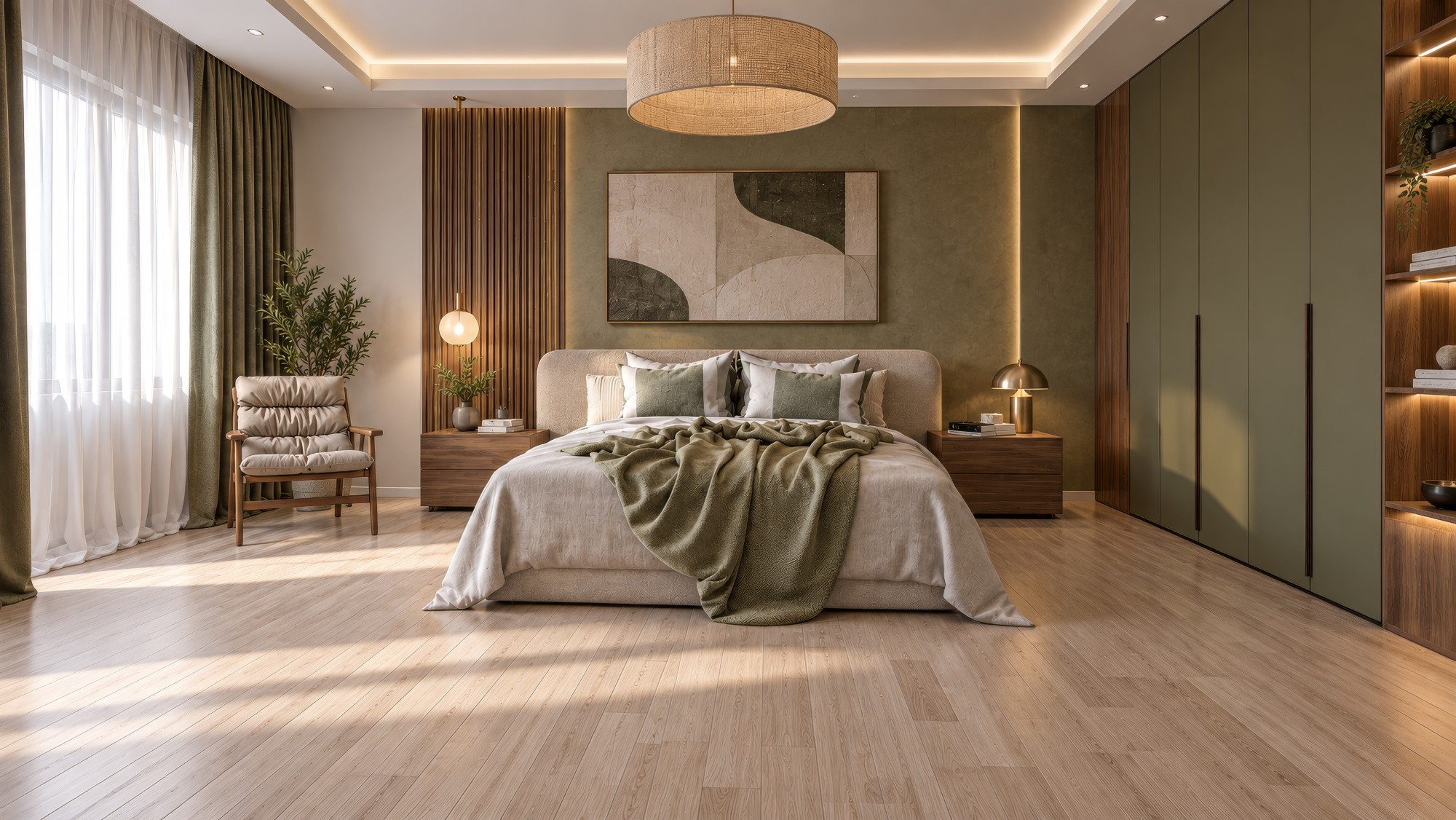
At a dining table, pull chairs back as you would when sitting down. Check whether their legs remain supported. Beside a bed, think about where your feet land and how much visible rug you want around the frame.
Compare sizes in the same room view
Use one room photo and compare two or three sizes without changing the viewing angle. Keeping the scene consistent makes differences easier to see. Look at the rug’s relationship to the sofa, table and exposed floor.
A preview helps you assess proportion, but it does not replace a tape measure. Unless a tool explicitly calibrates the room, do not treat its apparent scale as a measurement.
Check the details before ordering
- Confirm the selected variant’s width and length on the product page.
- Check whether the stated dimensions include any fringe.
- Consider door clearance and the combined thickness of rug and underlay.
- Review the retailer’s material, care and return information.
Screen colour, lighting and perspective can change the impression of a rug. If colour or texture is critical, ask the retailer about a physical sample.